
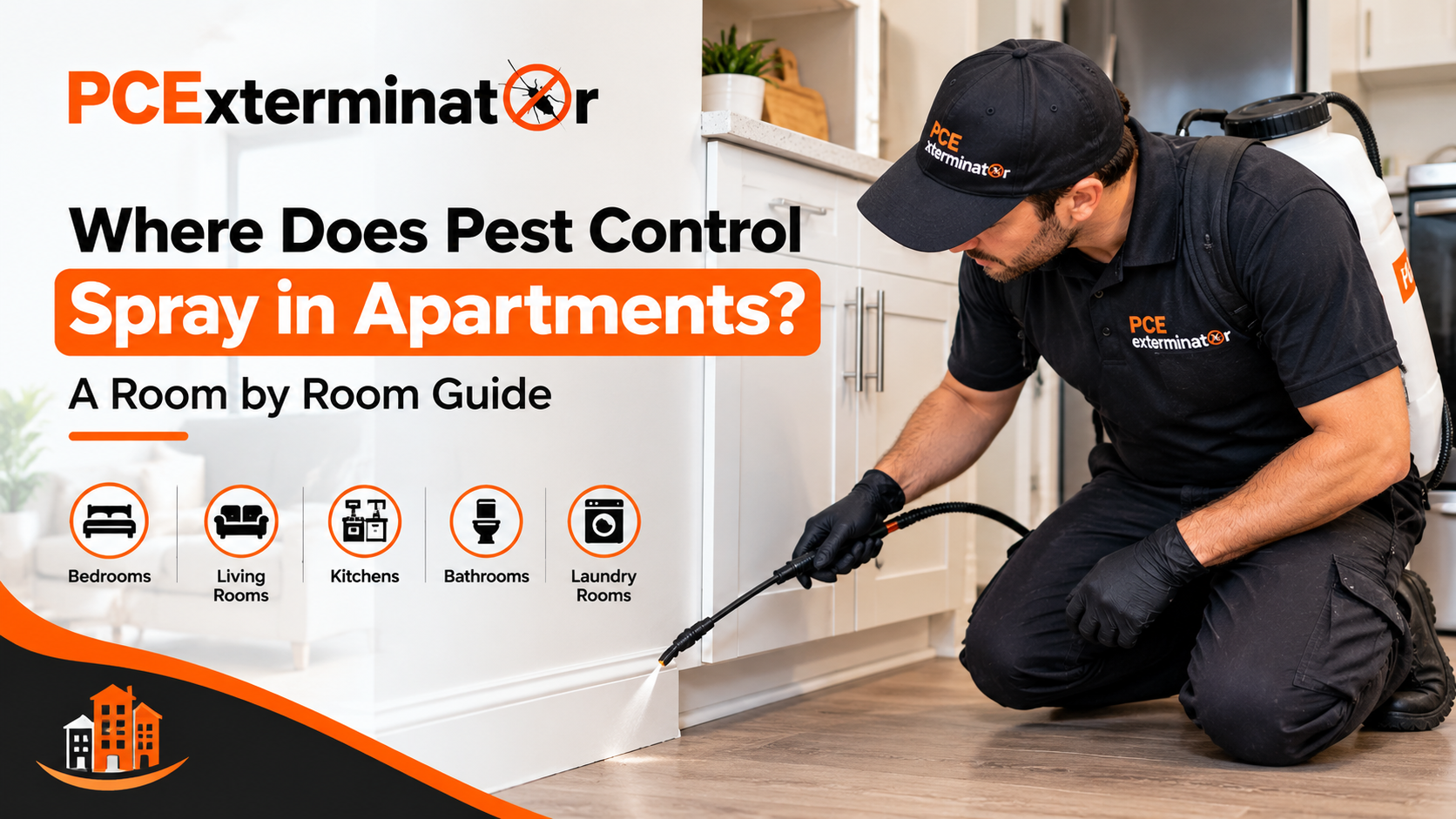
If you have booked a treatment and you are wondering where does pest control spray in apartments, the honest answer is: far less of your home than you expect. Technicians treat edges, voids, and entry points, not the open floors and surfaces you actually live on.
Where Does Pest Control Spray in Apartments? The Short Answer
A licensed technician works the perimeter of every room and the gaps pests travel through. Open carpet, sofas, countertops, and the middle of your living room are almost never treated.
Here is the standard treatment map for a single unit:
| Zone | What Gets Treated |
| Kitchen | Under sink, cabinet cracks, behind and under appliances |
| Bathroom | Vanity interior, plumbing gaps, tub and toilet base |
| Baseboards | Wall and floor junction, especially along exterior walls |
| Doors and windows | Frames, thresholds, sliding door tracks |
| Closets and storage | Corners, shelving edges, water heater areas |
| Entry points | Pipe penetrations, vents, outlet and switch plates |
| Common areas | Hallways, trash rooms, laundry, exterior perimeter |
The list looks long, but the actual product volume is small. PC Exterminators technicians use targeted placements measured in inches, not blanket coverage measured in rooms.
Takeaway: if a company sprays your whole floor, that is a red flag, not thorough service.
Why Apartment Pest Control Treatment Targets Edges, Not Open Rooms
This is the part almost no competitor explains, and it is the reason the answer to your question is so specific.
Insects are thigmotactic, meaning they instinctively keep their bodies pressed against a surface as they move. A cockroach crossing your kitchen does not walk across the open tile. It runs the seam where the floor meets the cabinet kick plate. Treating open space wastes product and exposes you for no benefit.
Modern PC Exterminators treatment follows Integrated Pest Management, which means product goes exactly where the pest lives and travels:
- Crack and crevice application into gaps under one eighth of an inch
- Gel bait dots inside cabinet hinges and appliance housings
- Dust injected into wall voids through utility openings
- Residual liquid banded along baseboards and thresholds only
What This Changes for You
Broadcast spraying of interior floors was standard decades ago. It is now considered poor practice for general pest work in occupied units, because it increases resident exposure while reaching almost none of the harborage where pests actually breed.
For German cockroaches specifically, gel bait outperforms spray so consistently that a good technician may barely spray your kitchen at all. Less visible product usually signals a better technician, not a lazy one.
Pest Control Spray in the Kitchen: The Highest Priority Room
Your kitchen has food, water, warmth, and hundreds of hidden gaps. It gets the most attention in any apartment pest control visit.
Pest Control Spray Under Sinks
The cabinet under your kitchen sink is the single most treated square foot in an apartment. It combines moisture, darkness, and a hole in the wall where the drain and supply lines pass through.
Technicians treat:
- The gap around drain and water supply penetrations
- The back corners where the cabinet meets the wall
- The underside of the sink basin where condensation collects
- The garbage disposal housing exterior
Pest Control Spray Behind Appliances
Appliances are treated because they are warm, undisturbed, and full of voids.
- Refrigerator motor housing and drip pan area
- Under and behind the stove, including the drawer cavity
- Dishwasher sides and the gap beneath the toe kick
- Microwave vent housing where mounted
Cabinets and Pantry
Cabinet hinges, corner joints, and the underside of shelving get small bait placements. Product is not sprayed onto shelf surfaces where food sits, and it is never applied inside food containers.
Takeaway: clearing under your sink before the visit gives the technician access to the most important zone in your apartment.
Pest Control Spray in Bathrooms and Utility Spaces
Bathrooms rank second because pests need water more urgently than food. A roach can survive a month without eating but only about a week without moisture.
Treated bathroom areas include:
- Inside the vanity cabinet, especially around pipe openings
- The gap behind and beneath the toilet base
- Tub and shower edges where the seal meets the wall
- The overflow plate and access panel if one exists
- Floor and wall junction behind the door
Laundry closets, water heater cabinets, and HVAC utility spaces get the same attention. These are the wettest, least disturbed parts of an apartment, and they often sit directly against a shared wall.
A Detail Most Guides Skip
Silverfish, drain flies, and springtails almost always trace back to a bathroom or utility moisture source. If a technician finds these, the correct response is a moisture fix plus targeted treatment, not repeat spraying. Ask what the source was. If nobody can tell you, the problem will come back.
Pest Control Spray Along Baseboards, Doors, and Windows
This is the visible work most residents actually watch happen.
Baseboards: a narrow residual band is applied where the baseboard meets the floor, concentrated along exterior walls and shared walls rather than every wall in the unit.
Doors: frames, hinges, thresholds, and the gap beneath the door. Entry doors and balcony sliders matter most.
Windows: frame corners, sill edges, and slider tracks where debris and moisture collect.
Balcony and patio: the slab perimeter, railing bases, and any exterior storage closet.
Why Coverage Is Uneven
A good technician treats asymmetrically. Your interior hallway wall shared with a neighbor gets more attention than a wall facing your own bedroom. Ground floor units get heavier exterior perimeter work. Top floor units get more attention at ceiling penetrations and light fixtures.
If your treatment looks identical to every other unit in the building, it was not a custom plan.
Pest Control Spray at Entry Points in Apartment Buildings
Here is what separates apartment work from house work: your pests probably did not come from outside. They came from unit 4B.
Shared infrastructure gives pests protected travel routes that a single family home simply does not have. Effective apartment building pest control treats those routes, not just your rooms.
Common shared entry points treated:
- Plumbing chases where pipes run vertically between floors
- Electrical outlet and switch plates on shared walls
- Gaps around HVAC lines, dryer vents, and exhaust ducts
- Cable, internet, and utility line penetrations
- Ceiling light fixtures and bathroom exhaust fan housings
- Trash chute openings and the door frame around them
Technicians often remove outlet covers on a shared wall and inject a small amount of dust into the void behind them. It is one of the highest value placements in an apartment and one of the least noticed.
PC Exterminators inspects adjacent units on building programs for exactly this reason. Treating one apartment while the source unit next door goes untouched simply pushes pests into the wall and waits.
Takeaway: if your unit has been treated three times and pests keep returning, the source is almost certainly not in your unit.
Where Pest Control Sprays Changes Depending on the Pest
Generic answers fail here. A roach plan and a bed bug plan share almost no treatment locations.
| Pest | Primary Treatment Zones | Typical Method |
| German cockroach | Cabinet hinges, under sink, appliance motor housings | Gel bait, crack and crevice |
| Ants | Trails, baseboards, under sink, window frames | Liquid bait, perimeter band |
| Bed bugs | Mattress seams, bed frame joints, headboard, outlet plates | Targeted spray, dust, heat |
| Mice and rats | Pipe gaps, cabinet voids, utility chases | Traps and sealing, no spray |
| Spiders | Ceiling corners, closets, window frames, storage | Web removal, residual spray |
| Fleas | Carpet edges, pet bedding areas, floor cracks | Unit wide spray, growth regulator |
| Silverfish | Bathroom cabinets, under tub, closet shelving | Dust, targeted application |
Notice that rodent work involves no spraying at all. If someone quotes you a spray treatment for mice, they are selling you the wrong service.
Where Pest Control Will Not Spray in Your Apartment
This section answers the question behind the question. Most people searching are not curious about coverage. They are worried about exposure.
A licensed technician will not treat:
- Open floor space, carpets, or rugs in general pest visits
- Countertops, tables, or any food preparation surface
- Inside cabinets where dishes or food are stored
- Children’s toys, high chairs, cribs, or play areas
- Pet bowls, bedding, or litter areas
- Mattresses and upholstered furniture, unless it is bed bug or flea specific
- Inside the refrigerator, oven, dishwasher, or microwave
If a technician moves toward any of these during a routine visit, stop and ask why. There are legitimate exceptions, flea work being the obvious one, but the reason should be explained before application, not after.
Every PC Exterminators technician walks residents through product selection, placement, and precautions before leaving the unit.
Apartment Complex Common Areas: The Part Tenants Never See
Pest control for apartment complexes extends well beyond individual units, and the common area work usually matters more than what happens inside your kitchen.
Treated building wide zones include:
- Trash rooms, dumpster pads, and chute interiors
- Laundry rooms, especially behind and beneath machines
- Mail rooms, storage cages, and bike rooms
- Stairwells, hallway baseboards, and elevator pits
- Utility rooms, boiler rooms, and roof access points
- Building foundation perimeter and landscaping beds
Trash and laundry rooms are the two most common reservoirs in any apartment building. They stay warm, hold moisture, and receive constant new food waste. A building that treats units monthly but ignores the trash room will never get ahead of the problem.
If you are a tenant with recurring issues, ask your property manager whether common areas are on the same service schedule as the units. The answer is frequently no.
How to Prepare Your Apartment for Pest Control
Five minutes of prep changes how much of the treatment map the technician can actually reach.
- Empty the cabinets under the kitchen and bathroom sinks
- Clear countertops and store open food in sealed containers
- Pull furniture a few inches off the walls where possible
- Move items away from baseboards in problem rooms
- Take out the trash and wash the bin
- Secure pets in a carrier or an untreated room
- Cover fish tanks and switch off air pumps
- Write down where and when you have seen activity
- Follow the laundry and bagging instructions for bed bug service
The Mistake That Undoes the Whole Visit
Do not mop, scrub, or wipe treated baseboards and cabinet interiors for at least a week. Residual products are designed to stay on the surface so pests pick them up over days. Cleaning them off the same evening removes the treatment you just paid for. Vacuuming and normal floor cleaning in untreated areas is fine.
How Long to Stay Out After Pest Control in an Apartment
Re-entry time depends entirely on what was applied, which is why you see wildly different answers online. The product label sets the legal minimum, and your technician should give you a specific number before leaving.
| Treatment Type | Typical Time Out of Treated Rooms |
| Crack and crevice application | 30 minutes to 2 hours, until dry |
| General interior surface spray | 2 to 4 hours |
| Gel bait or void dust | No wait, avoid contact with placements |
| Flea treatment | 3 to 5 hours |
| Bed bug chemical treatment | 4 to 6 hours |
| Exterior perimeter only | No indoor wait required |
Because most apartment work is targeted rather than broadcast, many residents never leave at all. You simply stay out of the treated room until the product dries.
Extend the wait for infants, pregnant residents, elderly residents, and anyone with asthma or respiratory conditions. Ventilate with windows and fans once surfaces are dry, not during application.
Is Pest Control Spray Safe for Apartments?
Yes, when applied by a licensed technician using EPA registered products at label rates in the placements described above.
Three factors make apartment treatment lower exposure than most people assume:
Placement: product goes into cracks, voids, and under appliances, not onto surfaces you touch daily.
Volume: a full unit treatment often uses a few ounces of diluted product across the entire apartment.
Formulation: modern residuals are encapsulated to stay bound to the surface rather than becoming airborne.
Tell the technician upfront about pregnancy, infants, asthma, immune conditions, and any pets including birds and fish. Bird and fish sensitivities in particular change product selection, and a good technician wants that information before mixing anything.
Verify the Job Was Done Right
- Under sink cabinets show evidence of treatment or bait placement
- Appliances were pulled out or treated underneath
- Entry points and pipe gaps were inspected, not just sprayed past
- You received a written report listing what was applied and where
- A follow up visit was scheduled before the technician left
FAQ: Where Does Pest Control Spray in Apartments?
Does pest control spray every room in an apartment?
No. Technicians treat the perimeter and problem zones of relevant rooms. Bedrooms and living rooms often get baseboard and window work only, or nothing at all.
Where do exterminators spray for roaches in apartments?
Kitchen and bathroom primarily: under sinks, cabinet hinges, behind the refrigerator and stove, and around plumbing gaps. Most roach work uses gel bait rather than spray.
Do pest control companies spray inside apartments?
Yes. Complexes often schedule exterior and common area service, but interior unit treatment is standard whenever there is activity inside. Tenants can also book directly.
What areas do pest control technicians treat in apartments?
Under sinks, behind appliances, baseboards, door and window frames, closets, plumbing penetrations, outlet plates on shared walls, and building common areas on complex programs.
How should I prepare my apartment for pest control?
Clear under both sinks, store open food, pull furniture off walls, take out trash, secure pets, and note where you have seen activity.
How long should you stay out of an apartment after pest control?
Usually 30 minutes to 4 hours depending on the application. Crack and crevice work only requires waiting until surfaces dry. Bed bug treatments need longer.
Is pest control spray safe for apartments?
Yes with licensed application. PC Exterminators uses EPA registered, pet safe and family safe products placed in voids and cracks that children and pets cannot reach.
Ready to Book Apartment Pest Control That Sprays the Right Places?
Now that you know where pest control sprays in apartments, you know what proper service looks like: targeted placements, treated entry points, inspected shared walls, and a written record of every application. PC Exterminators connects you with licensed, insured, background checked local technicians who work that way on every visit, whether you are a tenant with one stubborn roach or a property manager running a 400 unit community.
Free inspection. Straight answer. Custom quote with zero pressure. If pests return between scheduled visits, we come back and retreat at no charge.
| Contact | Detail |
| Phone | +1 855 616 1287 |
| info@pcexterminator.com | |
| Hours | Open 24 hours, 7 days a week |
| Coverage | All 50 US states, same day service in most areas |
| Guarantee | 100% satisfaction, in writing |