
Eco-Friendly Pest Control Solutions for Your Home or Business
PC Exterminators connects homeowners and businesses with licensed, insured local contractors who practice eco friendly pest control: methods that solve the problem while putting as little product into your space as possible. This page explains what the greener options actually do, what the marketing terms are legally allowed to claim, and how to tell one from the other.
- 4.1★ Rated
- 100% Free Referral
- 24/7 Support
What Is Eco-Friendly Pest Control?
Eco friendly pest control describes an approach, not a product label. A contractor working this way starts by finding and fixing whatever is drawing pests in, uses barriers and traps before reaching for a spray, and applies product to targeted spots instead of broadcasting it across a room.
The EPA calls the underlying method Integrated Pest Management, and ranks broadcast spraying as a last resort within it. None of this is alternative or fringe. It is the same framework the EPA publishes for managing pests in schools.
What the approach cannot promise is treatment with no product at all. Once pests are established, something usually has to be applied. The difference lies in how much, how precisely, and how often.
Environmentally Safe Extermination Methods
Two things separate a low-impact treatment from a conventional one: the order of operations, and the precision of the application. Both are methods, which makes them things a contractor can show you and you can verify.
Integrated Pest Management (IPM)
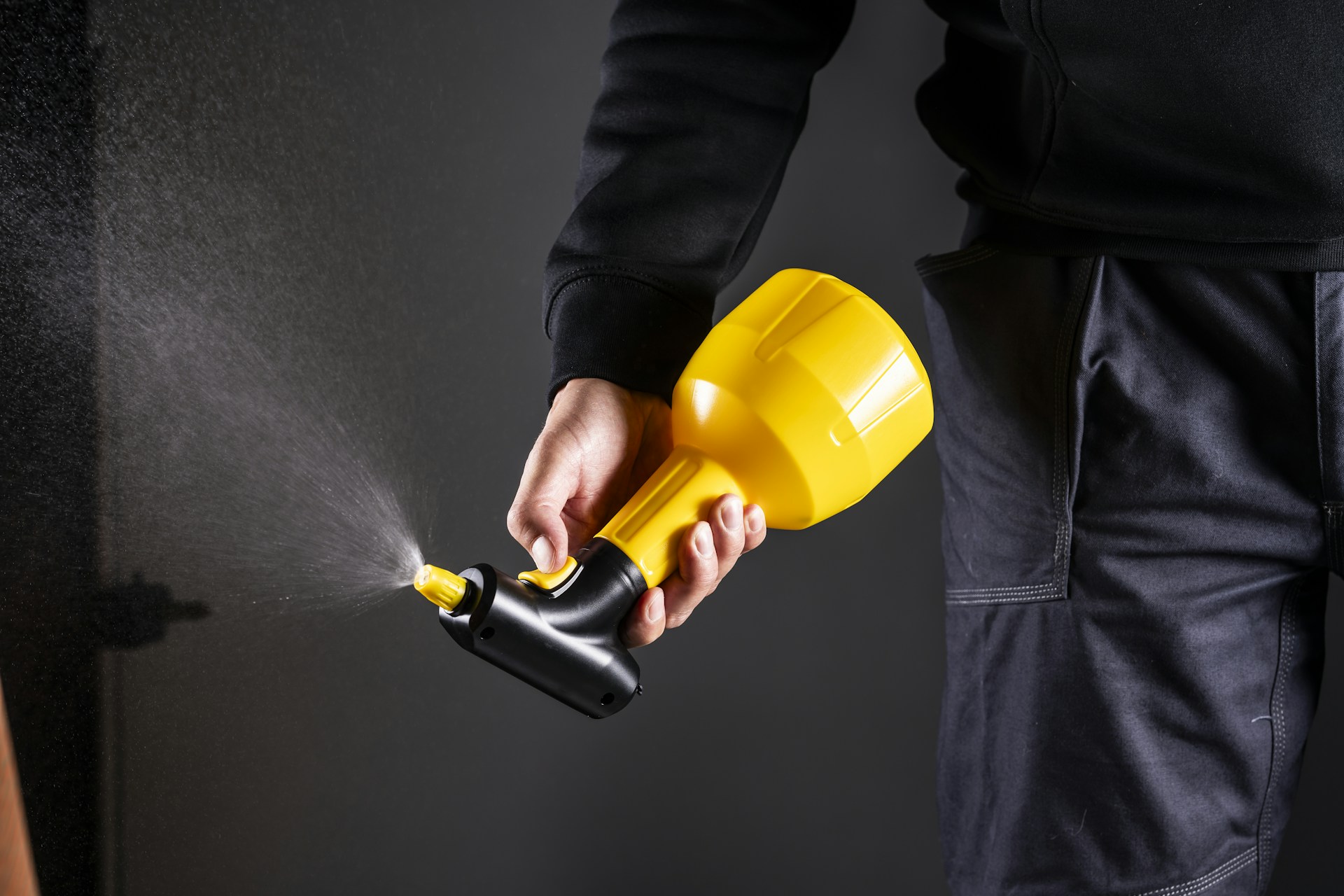
The EPA sets out four steps. First, set an action threshold, because one ant on a counter is not an infestation and does not warrant treatment. Second, monitor and identify the pest correctly, since many insects are harmless or useful and the wrong identification leads to the wrong product. Third, prevent, by managing the space so pests never reach a threatening level. Fourth, control, choosing the most effective lowest-risk method first and treating broadcast spraying as the last resort.

Low-Impact Pest Treatment Options
Low-impact work climbs a ladder and stops as soon as the problem stops. Sealing entry points and correcting moisture comes first. Traps, monitors and vacuum removal come next. Then bait stations, which hold product inside a housing instead of on a surface. Then targeted crack-and-crevice application, placing a small amount where pests travel and people do not reach. Broadcast spraying sits at the top of the ladder, and most jobs never climb that far.
Eco Friendly Pest Control for Common Household Pests
The lower-impact route looks different for every pest, because what drives each one indoors is different.

Eco Friendly Ant Control
Ants follow moisture and food trails, so the first fix is usually plumbing and sanitation rather than a product. Where treatment is needed, enclosed bait stations let foragers carry a small dose back to the colony, which reaches the nest that spraying the trail never does.

Eco Friendly Roach Control
Roaches need water more than food, so repairs come before any application. Gel bait placed in cracks, combined with monitors that show whether the population is dropping, handles most residential cases without a surface spray.

Eco Friendly Spider Control
Spiders arrive hunting other insects, which makes them a symptom. Reduce the insects and the spiders leave on their own. Web removal, door sweeps and exterior lighting changes do more than any indoor treatment.

Eco Friendly Rodent Control
Rodent work is the clearest case of all. Exclusion is both the lowest-impact method and the only permanent one, because sealing a quarter-inch gap stops the next mouse as well as this one. Trapping removes the current population without placing bait where pets or wildlife can reach it.
What "Non Toxic Pest Control" and "Chemical Free Pest Control" Actually Mean
These phrases get searched tens of thousands of times a month, and almost nobody explains them.
Federal pesticide labeling rules at 40 CFR 156.10 prohibit stating or implying that a pesticide is “safe,” “harmless” or “nontoxic to humans and pets,” with or without a qualifying phrase. The FTC adds that a non-toxic claim requires reliable scientific evidence the product is safe for people and the environment, and advises against unqualified claims like “eco-friendly.” So non toxic pest control is marketing language, not a regulatory status.
“Chemical free” is weaker still. Water is a chemical. Peppermint oil is a chemical. No pest control method has ever been chemical free.


A real category does sit underneath the marketing. The EPA exempts certain products from registration as minimum risk pesticides under 40 CFR 152.25(f), drawing on a fixed list of about 32 active ingredients including cedarwood oil, cinnamon oil, clove oil and citric acid. That exemption concerns data requirements, not safety. Exempt products skip EPA review, so no federal agency has checked whether they work.
That list carries a warning worth repeating. Cinnamon oil appears on it, and the Merck Veterinary Manual lists cinnamon oil as potentially hepatotoxic to pets. Cedar appears among oils linked to seizures in animals. Cats are especially vulnerable, being deficient in the enzyme glucuronyl transferase and highly sensitive to phenolic compounds. A product can be labeled natural, sit on the EPA minimum risk list, and still be a poor choice around a cat.
Benefits of Green Pest Control
The advantages are practical rather than philosophical, and most of them show up on the invoice.
- Less product in occupied rooms, which matters most in bedrooms and kitchens
- Fixing entry points stops the next infestation, not just this one
- Fewer repeat visits once the cause is corrected rather than masked
- Correct pest identification avoids paying for the wrong treatment
- Pollinators and beneficial insects outside stay undisturbed
- Documentation that satisfies commercial and school inspection requirements
The trade-off deserves stating plainly. A low-impact program usually takes longer to show complete results than a broadcast treatment, because it works on the cause instead of the symptom. For an active infestation needing immediate knockdown, a contractor may recommend conventional treatment first and prevention afterward.

Pet-Conscious and Family-Conscious Pest Control Options
- The product name and its EPA registration number, before the visit
- The re-entry interval in hours, and which rooms it applies to
- Whether bait stations can replace surface application in pet areas
- Where the product will be placed, and where it will not
- A copy of the product label or safety data sheet on request
If anyone in the household is pregnant, immunocompromised or has asthma, say so during the call. It changes what a contractor recommends.
Why Choose PC Exterminators for Eco Friendly Pest Control
PC Exterminators is a nationwide network, not a treatment crew. One call reaches a licensed, insured local contractor who covers your area, and the call gets answered rather than queued.
- Licensed and insured local contractors, verified before they join the network
- One number for residential and commercial requests
- Your preference for reduced-product methods passed to the contractor at intake
- Same-day and next-day availability in most covered areas
- Free quotes, with no obligation after the estimate
Tell the person who answers that you want lower-impact methods prioritized. That note travels with your request, so the contractor arrives knowing it instead of hearing it at your door.
Eco Friendly Pest Control FAQs
Does eco friendly pest control actually work?
Yes, for most common household pests. It often takes longer than a broadcast treatment because it addresses the cause, and results hold longer once entry points are sealed.
Is eco friendly pest control more expensive?
The first visit can cost more, since inspection and exclusion work take time. Total cost is frequently lower, because fewer repeat treatments are needed.
Are natural pest control products reviewed by the EPA?
No. Minimum risk products are exempt from EPA registration, which means EPA has not reviewed them for effectiveness. Exempt is not the same as approved.
Can pest control be done without any chemicals?
No. Every method involves chemicals, including water and plant oils. Exclusion, trapping and vacuuming involve no pesticide, which is the accurate way to describe them.
What should I ask before a treatment if I have pets?
Ask for the product name, its EPA registration number, the re-entry interval, and whether bait stations can replace surface application in rooms your pets use.
How soon can a contractor reach my area?
Same-day or next-day in most covered areas. Call for current availability, since it varies by location and season.
Eco friendly pest control works best when it starts with a proper inspection, so call PC Exterminators and tell us what you are seeing.